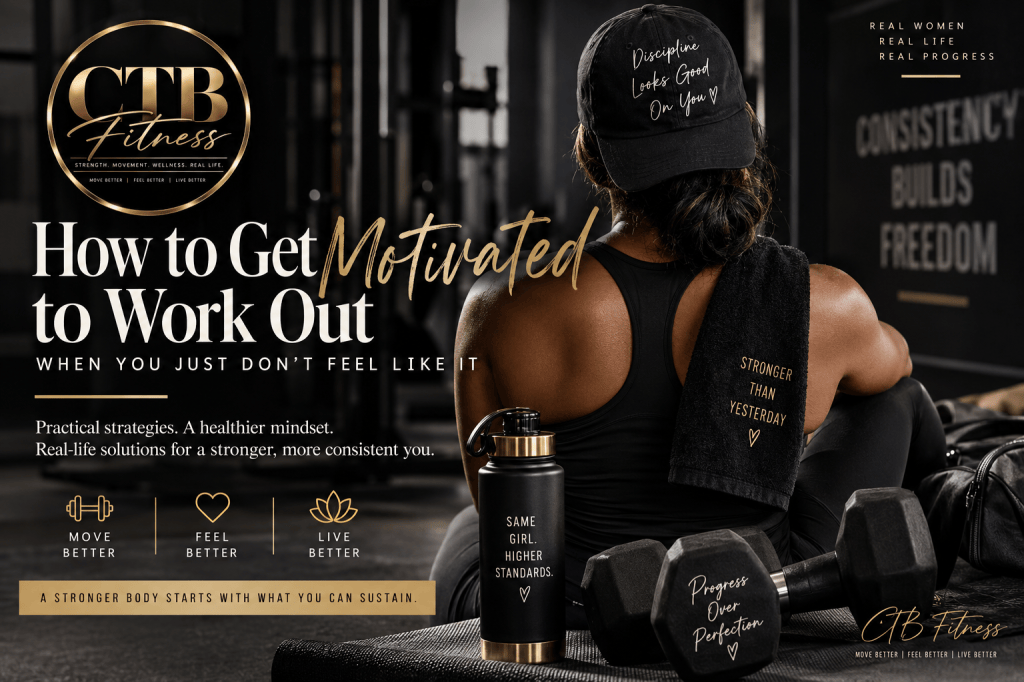
Pip: CTB Fitness this week is asking the question that defeats most of us before we even lace up: what do you actually do when you know you should work out but absolutely, categorically do not want to?
Mara: Cassandra Broome digs into exactly that — the gap between knowing movement is good for you and actually doing it consistently. Let’s start with motivation, and why it was never supposed to carry the whole load.
When Motivation Isn’t Enough to Keep You Moving
Mara: The central tension here is straightforward: most people don’t fail at fitness because they lack information. They fail because motivation — the thing they’re counting on — is a feeling, and feelings are unreliable.
Pip: Cassandra puts it plainly. After setting up how quickly a new routine can unravel, it lands on this: “Motivation is a feeling, and feelings change.”
Mara: And the upshot is that waiting to feel ready is itself the trap. Cassandra is direct about it — telling yourself you’ll work out when you feel more motivated means you may be waiting a while.
Pip: So if motivation is the wrong engine, what replaces it? The answer the article builds toward is consistency — but not the relentless, never-miss-a-day version. More like a relationship with movement that survives interruption.
Mara: That reframe matters practically. Cassandra suggests the first goal doesn’t have to be finishing a workout. Sometimes it’s just starting — putting on the shoes, walking ten minutes, doing the warm-up — because action often generates the motivation people were waiting to feel beforehand.
Pip: There’s a whole section on shrinking the workout, which might be the most useful reframe in the piece. The all-or-nothing mindset — if I can’t do the full hour, I’ll do nothing — is what turns one busy day into several weeks of inactivity.
Mara: Right, and the message is clear that something is enough. Twenty minutes counts. A walk counts. A short session at home counts. A shorter workout you complete will always do more than the perfect workout you keep postponing.
Pip: The article also makes a point that sounds obvious until you realize fitness culture has been quietly ignoring it for decades: you do not have to choose movement you hate.
Mara: “The best movement for you has to include one very important ingredient: You’ll actually do it.” That’s the whole argument. Find what fits your life and your body — and CTB is especially pointed that bodies change, particularly for women across different life seasons, and the approach has to evolve with them.
Pip: Modification isn’t failure. It’s information. That’s a line worth keeping.
Mara: The article also looks at the recovery side of the equation — food, sleep, hydration, stress — as part of what makes movement sustainable. And it reframes what progress even looks like, pushing back on the scale as the only metric that counts.
Pip: Stairs getting easier. Lifting more. Moving more consistently than three months ago. Those are the numbers worth watching.
Mara: The minimum-workout concept ties it together — not your ideal session, but a floor you can always hit, so the choice is never between a full workout and nothing.
Pip: The through-line across all of this is that sustainable fitness isn’t about performing discipline. It’s about building something that still works when motivation disappears.
Mara: Start where you are, adjust when you need to, and keep coming back. Because at CTB Fitness, a stronger body starts with what you can sustain.

